The Mustard Project: Planting for Pollinator Forage
A small experiment in sowing mustard as a cover crop and pollinator plant on Idaho farmland. What bloomed, what bees did with it, and what I learned about using mustard for late-spring forage.
This post is a field note in progress. I'll update it each season.
The idea: sow mustard (both yellow mustard, Sinapis alba, and brown/oriental mustard, Brassica juncea) on a small corner of bare ground as a late-spring / early-summer pollinator forage crop — and as a cover crop to improve the soil for whatever comes after.
Why mustard? Three reasons.
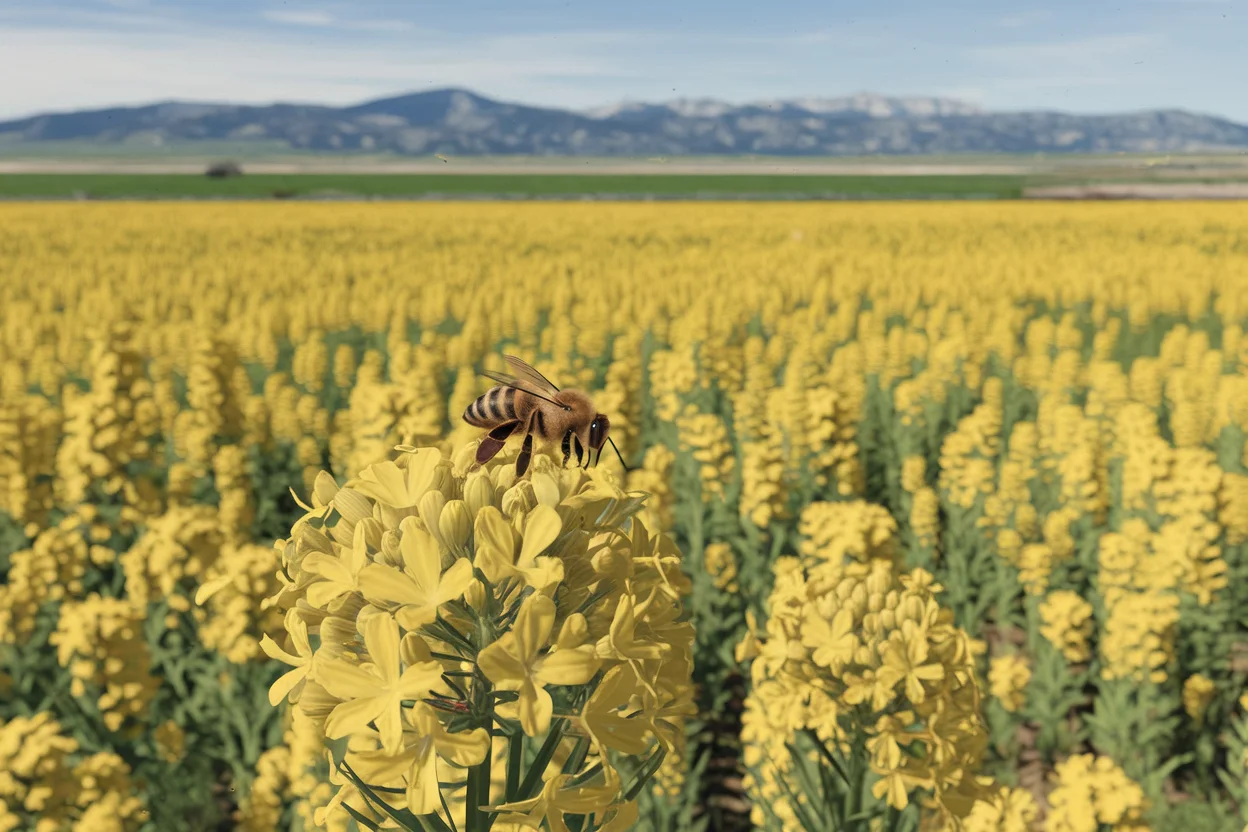
1. It blooms in the hungry gap
In the Magic Valley, we have a gap between the early-spring flowers (balsamroot, dandelion, fruit blossom) and the big summer flows (clover, alfalfa). A good mustard sowing blooms heavily in late May and June — right in that gap. Bees work it enthusiastically.
2. Fast to establish, cheap seed
Mustard germinates in cool soil (45°F+), grows quickly, and seed is inexpensive per pound. You don't need a lot of ground. A 20×30 foot plot is enough to give a small apiary a visible boost.
3. It's a soil improver
Mustard is a biofumigant crop — its roots release compounds that suppress some soil-borne fungi and nematodes. It also adds organic matter when tilled in. If you have a patch of tired ground, mustard before a vegetable planting or cover crop rotation is a clever use of the year.
The plan
Year one:
- Site: A 20×30 ft corner of ground that hasn't been planted for two years.
- Prep: Hand-till to 3 inches, remove rock, rake to a fine seedbed.
- Seed: Mix of yellow mustard and brown mustard, broadcast at roughly 10 lb/acre rate (so just a few ounces for this plot). Rake lightly to cover.
- Timing: Last week of March / first week of April, depending on weather.
- Water: If spring rain is sparse, one irrigation per week until established.
What I'll track
- Days to germination
- Days to first bloom
- Bloom duration
- Bee visitation (informal counts — walk the plot, count bees on flowers, log rough numbers)
- Honey visible in hives during mustard bloom
- Post-bloom: till in and measure soil condition going into summer
The questions I'm curious about
- Does the mustard bloom overlap cleanly with my hives' buildup period, or is it earlier/later than I think?
- Do I see honey in the hives during the bloom that I can attribute to mustard? (It has a distinct flavor.)
- Is the effort per-hive worth it, or is it simpler to plant clover elsewhere?
- What do native pollinators do with it? Bumblebees? Mason bees? Butterflies?
Why I'm posting this before I know the answer
I want to keep an honest record. Too much beekeeping content is "here's what worked, here's the finished recipe." That's helpful but it hides all the trials and adjustments. My plot may underperform. The bees may ignore it for something sweeter nearby. The season may be too dry for mustard to really flourish. All of that is information too.
I'll post updates as the season unfolds. If you're running a similar experiment — planting for forage on a small plot in the PNW or Mountain West — send me a note about what you're sowing and what you're seeing. I'd like to share results.
— Maggie