Your Climate Isn't Their Climate (and Why It Matters)
Most popular beekeeping content comes from the Southeast and Gulf Coast. Jeff Horchoff, Ian Steppler, and others are excellent — but Idaho and Pacific Northwest beekeeping is fundamentally different. Here's what changes.
Jeff Horchoff is wonderful. I've met him at bee conferences. His videos are among the best teaching resources on the internet. And almost none of his calendar applies cleanly to my apiary in Idaho.
That's not a criticism of Jeff. It's a criticism of how we consume beekeeping content. Your climate isn't their climate, and if you follow schedules built for the Gulf Coast in the Magic Valley, you will lose bees.
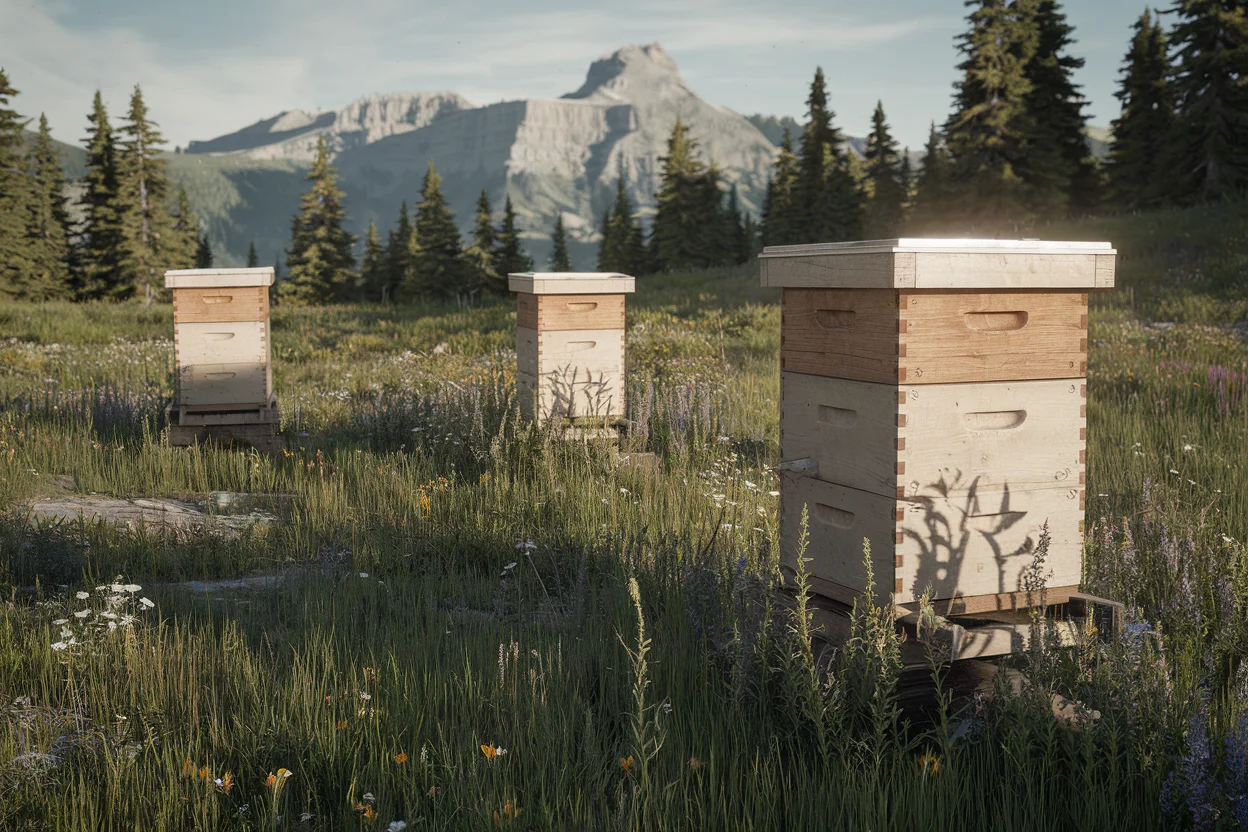
Three climates, three totally different bee years
Gulf Coast (Louisiana, Florida, coastal Texas)
- Mild winters. Cluster periods measured in weeks, not months.
- Continuous or near-continuous brood production.
- Multiple honey flows per year (citrus in spring, tallow in summer, etc.).
- Pests (small hive beetle, tracheal mite) that we barely see in Idaho.
Midwest / Mid-Atlantic (Ohio, Virginia, Missouri)
- Real winters, but shorter than ours.
- One main honey flow in late spring / early summer.
- Mite pressure starts earlier but winter cluster period is 3–4 months.
Northern Rockies / Pacific Northwest (Idaho, Montana, eastern Washington, Oregon high desert)
- Long winters, 4–5 months of cluster.
- Short but intense summer nectar flow.
- Mite treatment windows tighter because brood cycles are compressed.
- Overwintering is the hardest thing we do. In the South, overwintering is an afterthought.
What this means when you watch YouTube
When Jeff Horchoff inspects in January, his bees are foraging and his queen is laying. Mine are in a tight cluster and haven't seen daylight in weeks. If I tried to do what he does, I'd kill my colony in a single afternoon.
When Kamon Reynolds (Tennessee) talks about fall feeding, he's pouring syrup into hives at a time when my bees would turn that syrup into watery pre-honey that ferments in cold storage. I use dry sugar or fondant for late-season supplementation. Same goal, different tool, because my cluster period is twice as long as his.
When commercial pollinators from California talk about managing winter losses, they're often describing post-almond-bloom stress on bees that have been shipped thousands of miles. My bees never leave Twin Falls County. Different problem.
The principles travel. The schedule does not.
What does cross climate boundaries:
- Integrated pest management. Measure mites, treat when necessary, rotate modes of action. Works in Louisiana and Idaho.
- Queen quality. A well-mated, healthy queen matters everywhere.
- Adequate stores. The exact pounds differ by climate, but the principle of "enough food for the worst-case winter" is universal.
- Moisture management. Bees need dry hives everywhere. The specifics of how differ.
- Understanding your local flora. Blooming schedule is the calendar; know yours.
What does not translate without adjustment:
- Treatment timing. August-September in Idaho isn't the same window as August-September in Florida.
- Supplementation methods. Syrup in November is fine in the South, dangerous here.
- Insulation practices. Most Southern beekeepers don't insulate. We must.
- When to open a hive. "A nice 60° day" is normal in December for them and a rare gift for us.
- Honey flow expectations. One big flow versus three small ones changes how you manage supers.
Who to learn from in cold country
A short list of people worth your time if you keep bees in Idaho, Montana, eastern Washington/Oregon, or similar:
- Dr. Leo Sharashkin (horizontalhive.com) — Missouri, but his horizontal-hive methods translate well to our climate. His books are excellent.
- Michael Palmer (Vermont) — if you want a cold-country perspective on sustainable beekeeping and Russian strains.
- Randy Oliver (Sierra Foothills, CA) — not exactly our climate, but his scientific, data-driven approach is gold for any climate.
- Your state apiarist. Idaho State Department of Agriculture has one. Email them. They respond.
- Local beekeeping associations. The Idaho State Beekeepers Association and county chapters have been keeping bees here for generations.
The takeaway
Watch the YouTube channels. Read the books. Go to the conferences. But filter everything through one question: what climate is this person in, and how does that change what they're telling me?
You'll save yourself colonies.
— Maggie